what is the number one way to prevent the spread of infection
A few uncomplicated precautions tin can help you avoid getting sick with an infectious disease
Infections are caused by microscopic organisms known as pathogens—bacteria, viruses, fungi, or parasites—that enter the body, multiply, and interfere with normal functions. Infectious diseases are a leading cause of illness and death in the U.s. and around the earth. For certain people--particularly those with underlying illnesses like middle disease or cancer, those who accept serious injuries, or those who are taking medications that weaken the allowed system—information technology's more hard to avoid getting ill with an infection. Living in an flush state like the Usa, the threat nosotros confront from deadly viruses, bacteria, and parasites tin seem remote, but these infectious microbes are ever present among us, according to Dr. Michael Klompas, writing in the Harvard Medical School Special Health Report Viruses and Disease. Dr. Klompas is an communicable diseases specialist at Harvard-affiliated Brigham and Women'due south Hospital. However, for most healthy people, following a few bones principles can become a long mode in helping to forbid infections.
Understanding how infections are transmitted can assistance you avoid getting ill
Not long agone, no one understood that infectious diseases were caused by tiny organisms that moved from person to person. Even now, although we know that microscopic living microbes cause disease, how they do so is not ever obvious. But we do know that nearly microbes enter through openings in the body—our noses, mouths, ears, anuses, and genital passages. They tin also be transmitted through our peel through insect or animal bites. The all-time style to preclude infections is to block pathogens from entering the body.
Adept hygiene: the main manner to prevent infections
The kickoff line of defense is to keep germs at bay by post-obit practiced personal hygiene habits. Forbid infection before it begins and avoid spreading it to others with these easy measures.
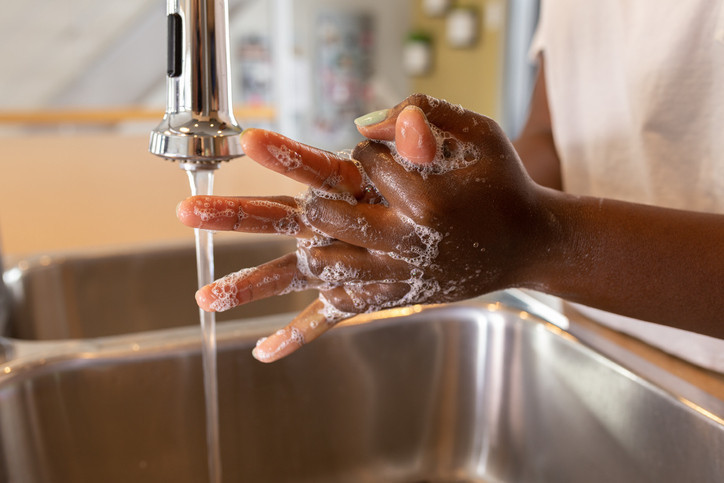
- Wash your easily well. You probably wash your hands afterward using the bathroom, before preparing or eating food, and after gardening or other muddy tasks. You lot should likewise wash upward afterwards blowing your nose, cough, or sneezing; feeding or stroking your pet; or visiting or caring for a sick person. Wet your hands thoroughly. Lather up with soap or cleanser, and rub information technology into the palms and backs of your hands and your wrists. Be certain to clean your fingertips, under your nails and between your fingers. Rinse nether running water. Dry your easily and wrists thoroughly.
- Embrace a cough. Embrace your mouth and nose with a tissue when you sneeze or coughing, then dispose of information technology. If no tissue is handy, cough or sneeze into your elbow rather than into your easily.
- Wash and bandage all cuts. Any serious cut or animal or human seize with teeth should be examined by a doctor.
- Do not pick at healing wounds or blemishes, or squeeze pimples.
- Don't share dishes, glasses, or eating utensils.
- Avoid direct contact with napkins, tissues, handkerchiefs, or similar items used by others.
Exercise good nutrient-safety techniques to avoid getting sick
Although almost cases of food-borne infection are non dangerous, some tin can pb to serious medical conditions, including kidney failure and meningitis. You tin can prevent infections by food-borne pathogens in your household by preparing and storing foods safely. The post-obit precautions will assist impale microbes that are present in the food you purchase and aid you avoid introducing new microbes into your food at habitation:
- Rinse all meat, poultry, fish, fruits, and vegetables under running water before cooking or serving them.
- Wash your hands with lather and h2o before and afterwards you handle raw meat.
- Separate raw foods and cooked foods. Don't use the same utensils or cut boards with cooked meat that were used to set up the raw meat without washing between uses.
- Cook foods thoroughly, using a meat thermometer to ensure that whole poultry is cooked to 180° F, roasts and steaks to 145° F, and basis meats to 160° F. Melt fish until it is opaque.
- Defrost foods only in the fridge or in the microwave.
Whether you are young or young at heart, getting vaccinated is an essential part of staying healthy. Many serious infections can be prevented by immunization. While vaccines may cause some common side effects, such equally a temporarily sore arm or low fever, they are generally prophylactic and effective.
Vaccinations are essential if you are to avoid getting sick
Consult your health intendance provider regarding your immunization condition. In general:
- Children should receive the recommended childhood vaccinations.
- Adults should make sure their vaccinations are up to date.
- When traveling abroad, check with your health care provider about additional immunizations.
- Make certain your pet'south vaccinations are up to date, too. In addition to protecting your pet, this will as well protect you and your family.
Accept travel precautions
If yous are planning a trip, ask your doctor if you lot demand any immunizations. Discuss your travel plans with your md at least three months before you get out.
- If yous are traveling to an area where insect-borne disease is present, take and use an insect repellent containing DEET. In many tropical regions, mosquitoes tin can carry malaria, dengue, yellow fever, Japanese encephalitis, or other serious infections.
- Become your shots before you leave the Us. Avert getting any unnecessary shots, immunizations, or tattoos away. Needles and syringes (even the disposable ones) are reused in some parts of the world.
- Practise not consume ice while traveling. Freezing does not kill all h2o-borne infectious microbes.
- Drink only bottled drinks—such as soft drinks or bottled water—that take secure caps. Exist aware that some fruit juices may be fabricated with impure local h2o.
- Boil all tap water before drinking or drink only bottled h2o; use bottled or boiled water to castor your teeth.
- Practice not swallow uncooked vegetables, including lettuce; exercise non eat fruit yous haven't peeled yourself.
- Do not consume dairy products (milk may not be pasteurized).
How to prevent infections past sexual manual
The merely sure manner to prevent sexually transmitted diseases is to not have sexual intercourse or other sexual contact. That'southward not an selection for most people, so the next best selection is to follow these safer sex guidelines:
- Engage in sexual contact only with i partner who is having sex only with you.
- Both yous and your partner should be tested for HIV and other sexually transmitted diseases.
If you practice have sex with a new partner, make certain the partner is tested, and take the post-obit precautions:
- For vaginal sex activity, use a latex or polyurethane safe or a female condom.
- For oral sex, use a latex or polyurethane male condom or a female person condom.
- For anal sexual practice, use a latex or polyurethane male condom.
Avoiding problems-borne pathogens
Both mosquitos and ticks are carriers of viruses and bacteria. And both have been associated with serious epidemics in the final decade.
While it's true that nigh mosquitoes in northern climates don't transmit disease, some do. Within i decade, West Nile virus has spread throughout the United States and parts of Canada. Several other forms of musquito-borne encephalitis are likewise carried by mosquitoes in Due north America. Tropical diseases pose a threat if the mosquitoes that carry them hitch a ride in boats or expand their range northward from Primal America.
Ticks are widespread and can transmit a variety of diseases, including Lyme affliction and many others. They live in grassy and brushy areas and are almost prevalent during moisture seasons. A common hiding place is in wet leaves. They oft infest animals, including field mice and deer. And they may exist transported into your home by your pets.
The following can help prevent infections from bug bites:
- Use insect repellents approved past the Environmental Protection Bureau, including those containing DEET, picaridin, or oil of lemon eucalyptus. If mosquitoes are bitter you, reapply the repellent.
- Limit outdoor activeness during peak mosquito hours of early on morn and evening.
- Drain any standing water virtually your home to foreclose mosquitoes from breeding.
- Check your neighborhood and pick up trash, discarded cans, bottles, and other containers that can contain enough water to permit mosquitoes to breed.
- If you lot plan to spend time in an area where ticks are common (fifty-fifty your back yard), wear light-colored clothing so ticks tin can exist spotted and removed earlier they attach. When hiking on trails, stay in the center of the trail to avoid picking up ticks from bushes and brush. When you render, cheque your wear and torso for ticks. Check your pet before allowing it indoors.
- If a tick has attached itself to y'all or your pet, grasp information technology firmly with tweezers shut to the tick's mouth and pull steadily. Cleanse the area of the tick bite thoroughly with antiseptic. Watch the area closely for a couple of weeks for signs of rash or swelling.
Using animal-control to prevent infections
Decision-making the population of mice or rats in and about your habitation tin can help you lot avoid pathogens spread by rodents and too assistance control the population of ticks that spread affliction. Rodents tin harbor a number of pathogens, including lymphocytic choriomeningitis virus, leptospirosis, plague, and hantavirus. Other wildlife can likewise transmit rabies and other infections. The post-obit measures can help you lot avoid getting sick from diseases transmitted by animals:
- Keep food and garbage in covered, rodent-proof containers.
- Seal holes and cracks in your home to deter rodent access.
- Clear brush and junk abroad from the foundation of your home.
- Do not stir up grit in rodent-infested areas. Instead, wet-mop or sponge the expanse and treat with disinfectant.
- When outdoors, exercise non disturb rodent burrows or handle rodents.
- If your rodent problem is severe or persistent, consult a pest control expert.
- Stay clear of wild animals. Many wildlife, including raccoons, skunks, bats, foxes, and coyotes, can spread rabies to humans by biting. Go along your pets away from wild animals, likewise. Dogs, cats, or any other type of warm-blooded fauna can pick upwardly rabies from wild animals and pass rabies along to people.
– By Beverly Merz
Executive Editor,Harvard Women's Health Scout
Epitome: marieclaudelemay/Getty Images
As a service to our readers, Harvard Health Publishing provides admission to our library of archived content. Please annotation the date of terminal review or update on all articles. No content on this site, regardless of appointment, should e'er exist used every bit a substitute for direct medical advice from your doctor or other qualified clinician.
whittingtonwilicul.blogspot.com
Source: https://www.health.harvard.edu/staying-healthy/how-to-prevent-infections

Post a Comment for "what is the number one way to prevent the spread of infection"